



HISTORY
A Brief History of St. John's Parish
When it comes to securing a place in history, few churches can claim as many distinctions in their heritage as St. John's Episcopal in downtown Huntingdon, Pennsylvania.
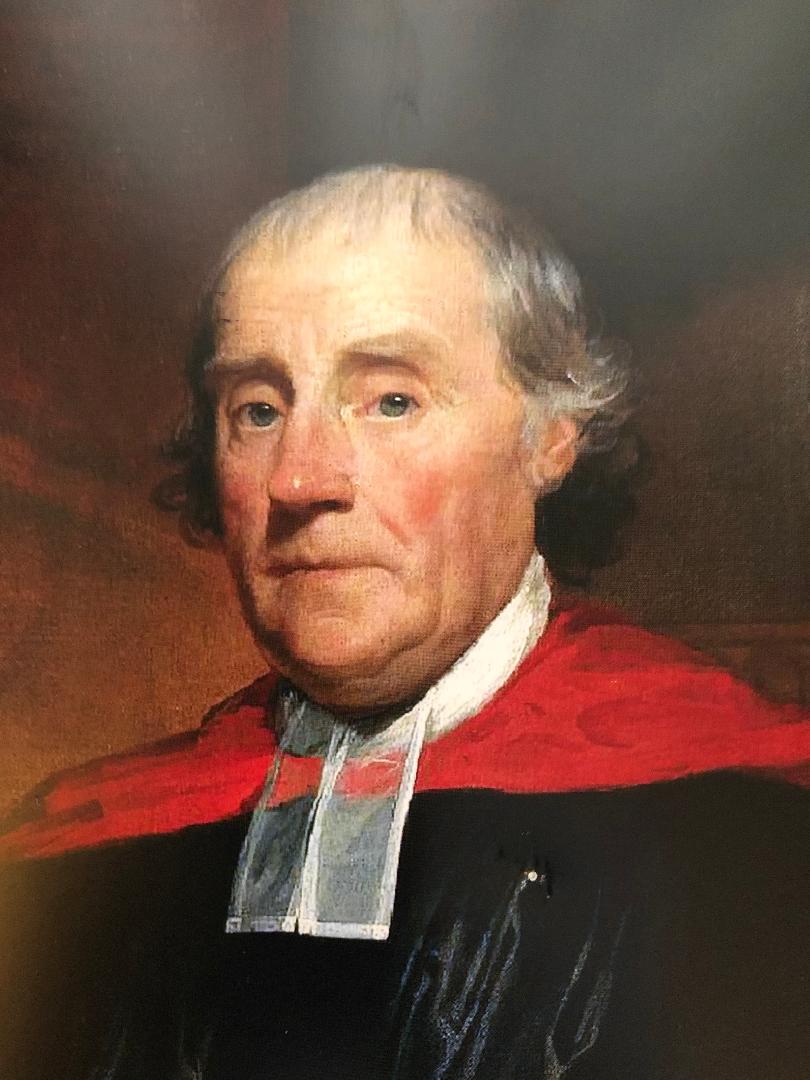
Records indicate that in 1774, during one of his visits to the town he founded, the Rev. Dr. William Smith, a priest in the Church of England (also known as the Anglican Church), and the first provost of the College of Philadelphia (now the University of Pennsylvania) "... preached on the Lord's Day at Standing Stone [Huntingdon] and gave notice that he would baptize the children sent to him." It is said that he baptized 80 people. The portrait on the right is the likeness of the Rev. Dr. William Smith, as painted by Gilbert Stuart
Growth was slow for Anglicans in America during the years of struggle for independence because of its linkage to the Church of England, and because many of its members were Loyalists. It was this same Rev. Smith who suggested that the name for the now-independent Anglican Church in America be "The Protestant Episcopal Church in the United States of America." This name signified that this new church would be an independent, sister church, rather than a daughter of the church of the Church of England.
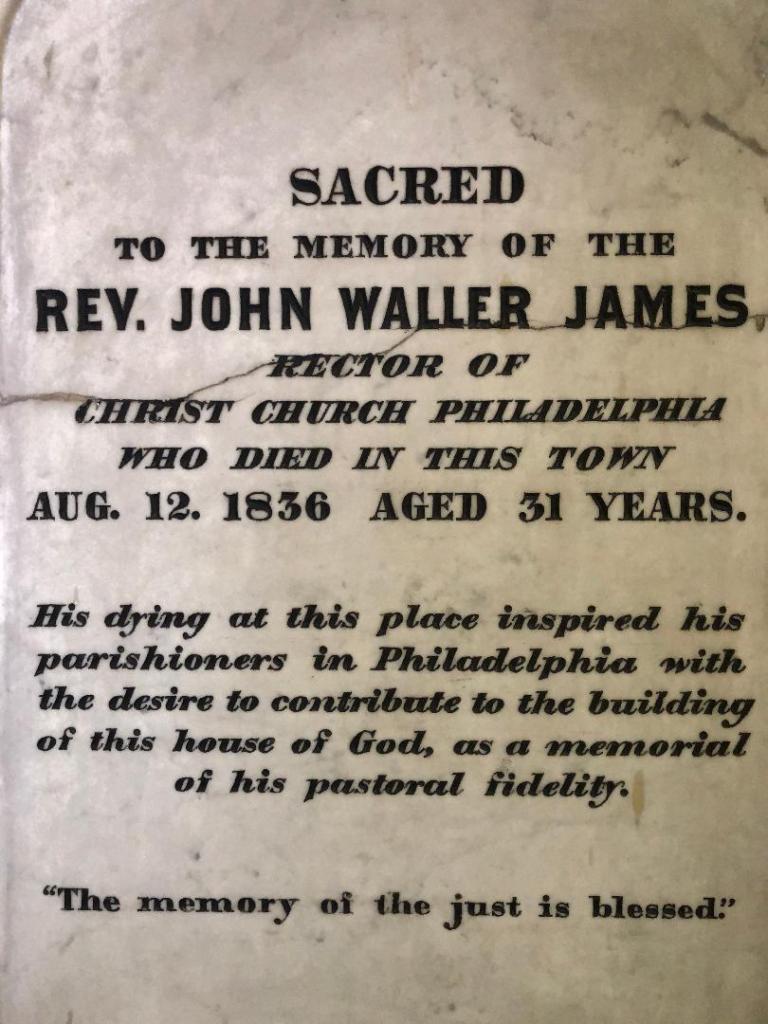 In the 1770's, as in many communities, the faithful met in individual homes. Sometime around 1843 the congregation purchased a 30' x 100' plot of land across from the Courthouse and made plans to erect a church building. As plans unfolded for the building of the new church, members of Christ Church, Philadelphia assisted with the expense involved in thanksgiving for the care offered to their Rector, the Rev. John Waller James, who died in Huntingdon in the summer of 1836 (a plaque commemorates his passing, and may be seen on the left side of the church chancel).
In order to do proceed with the construction of the building, the congregation needed to be incorporated. When this was accomplished, the building was completed and consecrated on October 23, 1845. The building has survived intact to this day, with few changes. The last refurbishing occurred in 2002.